
At the sonoma community center
The Great Elephant Migration
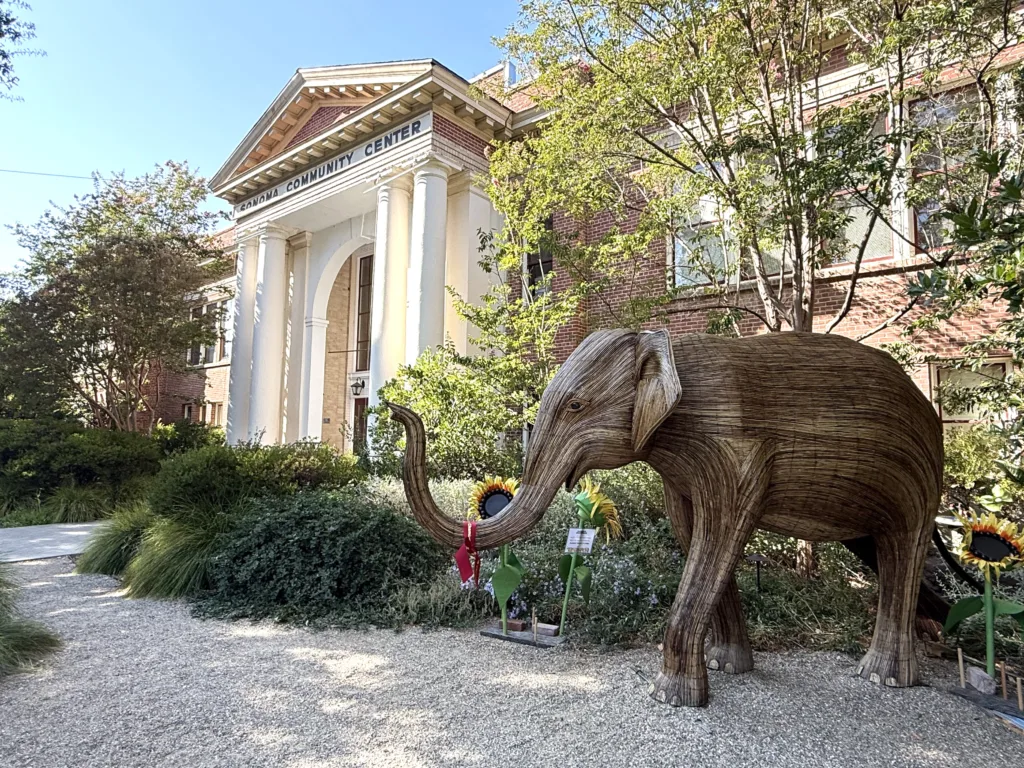
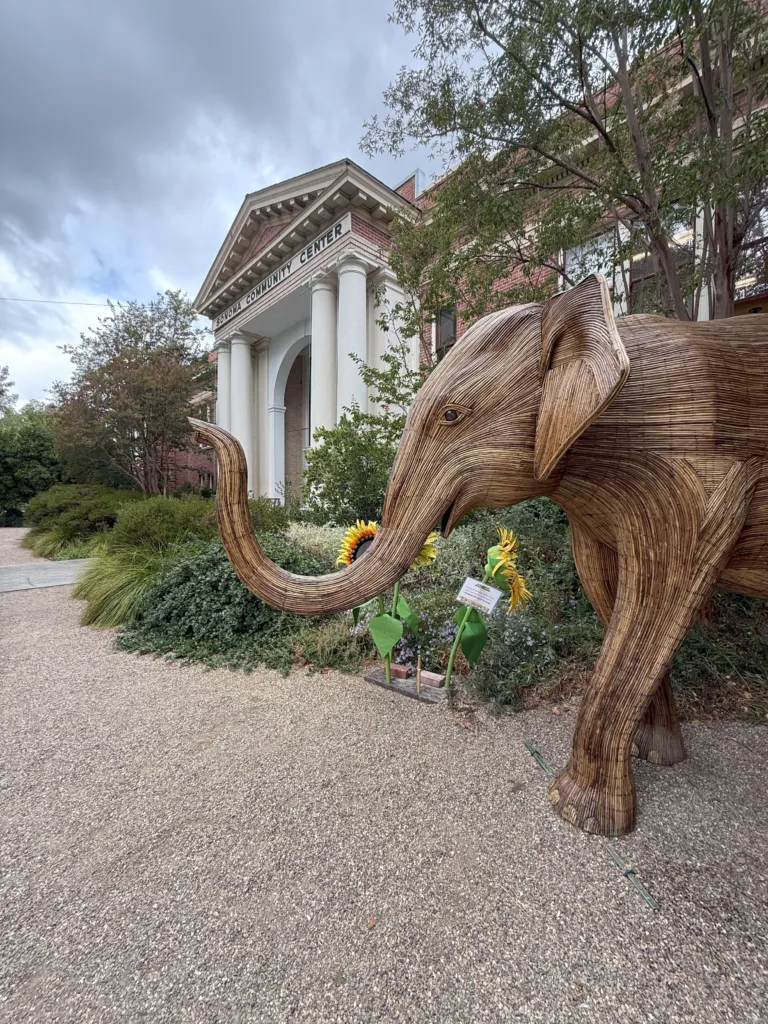
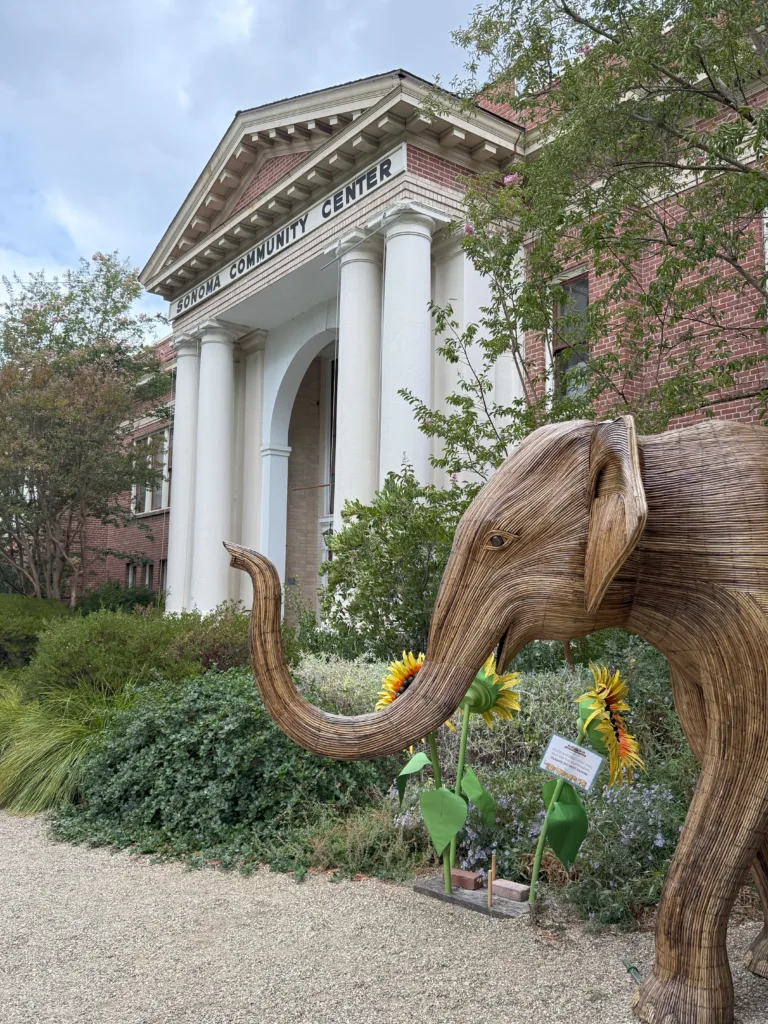
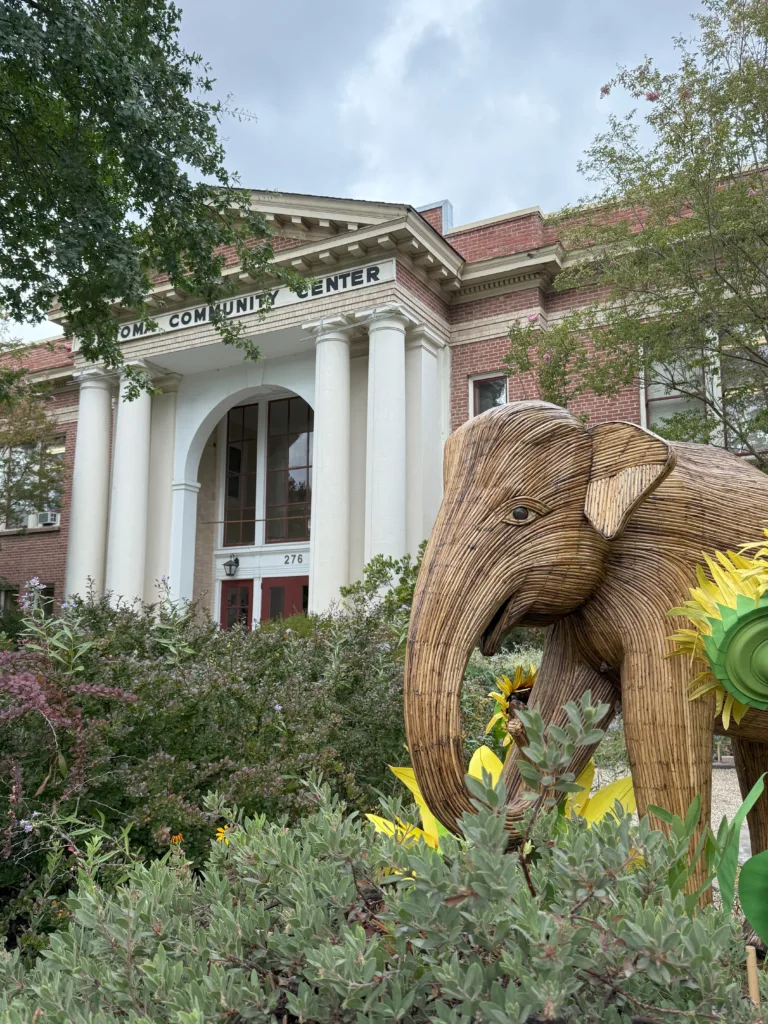
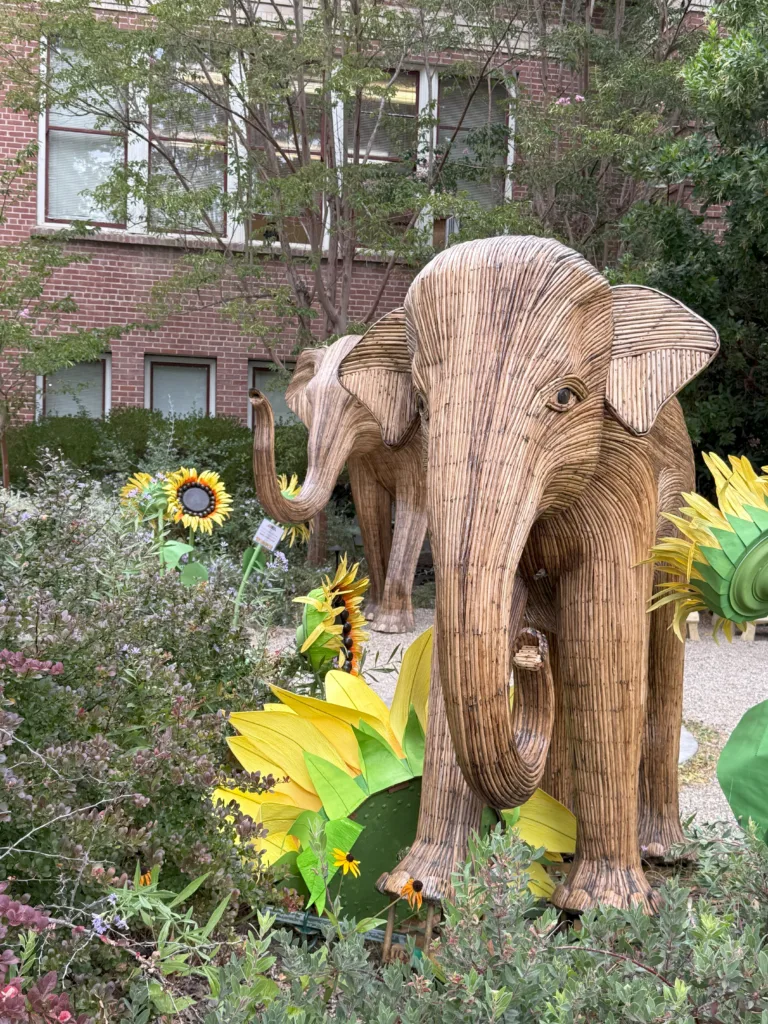
The Sonoma Community Center is proud to present 2 sculptures from The Great Elephant Migration global art exhibit created by The Real Elephant Collective of India’s Nilgiri Biosphere Reserve, Tamil Nadu. The Center’s elephants, Moringa the mother and Marigold the infant, are part of the center’s public art exhibition and are located in the front garden. The Great Elephant Migration exhibit calls on us to think about our coexistence with the natural world and the power of art to connect and heal us.
The elephants are a permanent installation in the front garden of the Sonoma Community Center and are free to view and visit anytime.
The elephants are made from lantana camara, one of the world’s top invasive weeds. This fast growing shrub has a stranglehold on 300,000 sq. kilometers of India’s Protected Areas. Lantana pushes animals out of their forest homes into urban areas, leading to an increase in human-wildlife conflict. The use of lantana to create the elephants helps remove the weed from protected areas, leaving wildlife more space to roam.
Each elephant has been created by The Real Elephant Collective, a community of 200 indigenous artisans from the Bettakurumba, Paniya, Kattunayakan and Soliga communities of India’s Nilgiri Biosphere Reserve, Tamil Nadu. The collective has spent the past five years beautifully bringing to life every elephant they live alongside, in intricately detailed sculptural form. Like many Indigenous cultures around the world, these communities have intimate knowledge of nature and wildlife, based on generations of observation and experience.
All funds raised through the The Great Elephant Migration will be directed to projects that protect biodiversity and enable people and wildlife to share space.

This exhibit was generously donated to the Sonoma Community Center by the KHR McNeely Family Foundation.
Photo Gallery
30 Interesting facts about all elephants
- Elephants are the largest living land mammals weighing sometimes up to 13,000 pounds / 7 tons.
- An elephant’s heart can weigh as much as 50 pounds.
- An elephant’s trunk is composed of over 40,000 muscles.
- Their trunks can hold up to two gallons of water at a time.
- There are 3 species of elephants: the African savanna, the African forest, and the Asian elephant.
- Elephants are herbivores, primarily eating leaves, fruit, grass, bark, and roots.
- Their teeth are designed for grinding plants, and they replace them six times during their lifetime.
- Despite their thick, wrinkled rough-looking skin, it is very sensitive and prone to sun and insect bites.
- Their tails serve as communication tools, swishing to signal moods or to ward off insects.
- Elephants are unique among mammals in that they cannot jump.
- Elephants’ feet are cushioned with a spongy pad that absorbs the impact of their massive weight.
- They can pick up objects as small as a single blade of grass with their trunks.
- Elephants cry, play, and laugh, and they kiss and greet each other with hugs by intertwining their trunks.
- When excited, they flap their ears and trumpet loudly.
- Elephants have an excellent sense of smell and hearing, though their eyesight is poor.
- Elephants’ ears help regulate their body temperature, acting like large fans.
- A female elephant carries her baby for an average of 22 months.
- Baby elephants suck their trunks for comfort, similar to human babies sucking their thumbs.
- Male elephants leave their family herd around 12-15 years old to live alone or join other males.
- Both male and female African elephants have tusks, while only some Asian males have them.
- Their tusks are elongated incisor teeth made of ivory and continue to grow throughout their lives.
- Like human teeth, if an elephant breaks its tusk, it will not grow back.
- Elephants can swim and they use their trunk to breathe like a snorkel in deep water.
- A thirsty elephant can drink 25 to 50 gallons of water in a single day.
- Elephants can spend up to 16 hours a day eating, consuming hundreds of pounds of food.
- Elephants can make subsounds which they use for communication over long distances.
- Elephants are very social and live in complex, communal societies led by a matriarch, or elder female.
- Elephants are extremely smart, and possess amazing memories. They bond and grieve their lost family.
- Male and female elephants are not monogamous and will mate with multiple partners.
- In the wild, elephants typically live between 50-70 years.